Showing posts with label transportation. Show all posts

Monday, February 15, 2010

The view from Portland

My feet hurt... thank you Portland. Four days of a carfree mini vacation using a walking/transit combo put a lot of miles on the feet. Still tired from traveling today and then immediately diving into work back in Missoula so this post will be short and quick... for some great thought provoking writing check out @Urbanophile's arguement for fare-free transit, which would be perfect for Portland, and this article that shows that being sighted close to transit is saving homes from entering foreclosure.

Enjoy the pictures... I'll write more on Portland later... especially the Hipster economy.


Plane from Seattle --> Portland. A little greenwashing? I think so


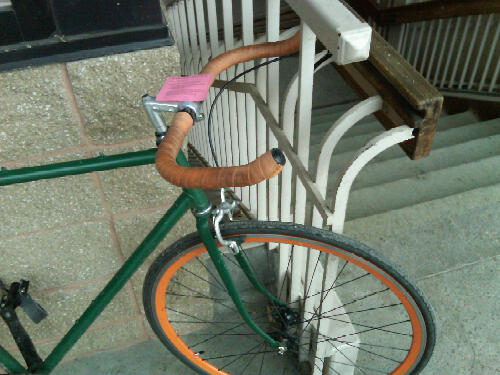
You know your entering a different world when there is bicycle parking at the airport terminal.


My ride from the airport awaits.


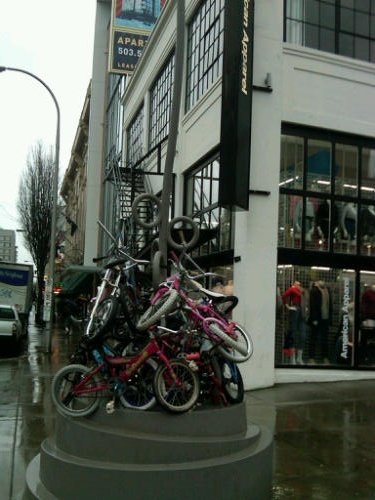
On-street Bicycle parking at Powell's Books


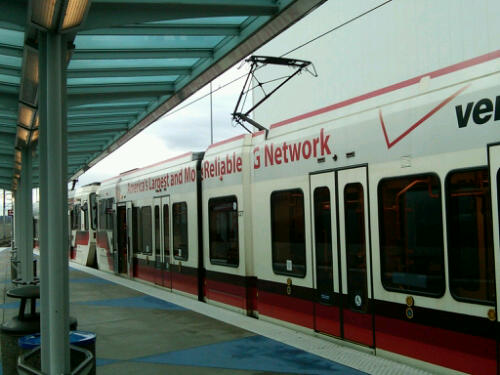
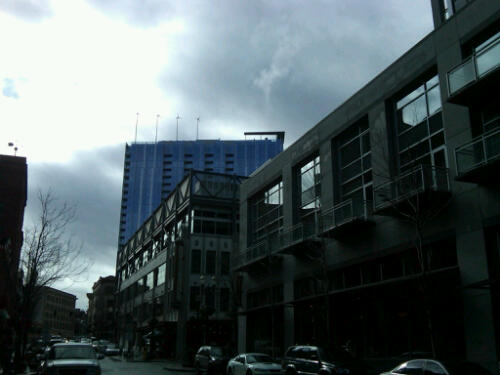
Portland does a great job of using public (park) space to accentuate the utility and connectivity of the various rail lines.


Only in Portland


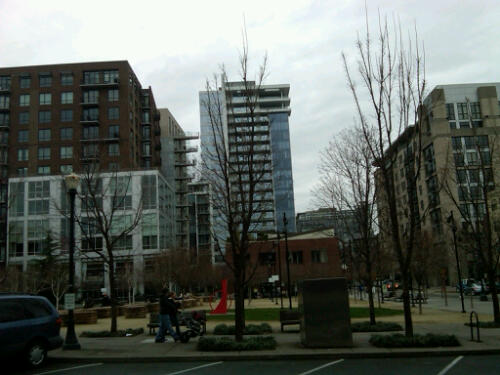
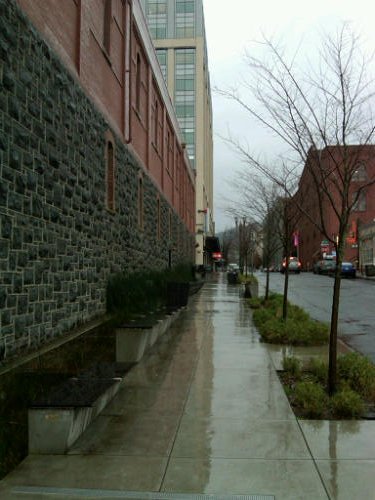
Another innovative urban design... this time add green infrastructure and reduce rain water runoff.


Building with both wind turbines and solar on the roof.


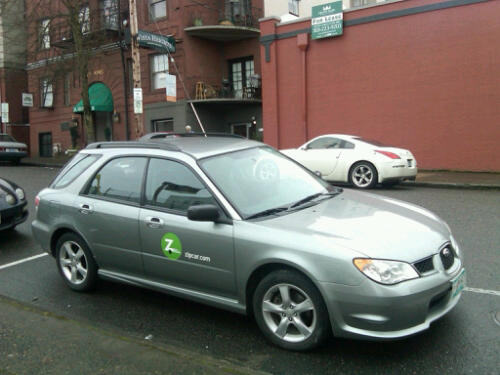
Making it that much easier not to own a car.


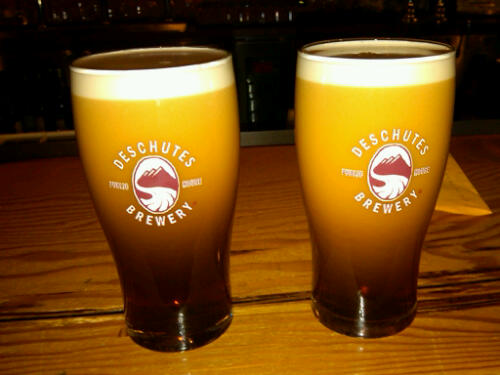
And finally the beer... my god the beer. A little nitro never hurt anyone... and anyway can't get this shit in the stores. Don't worry Kettlehouse, your still the beer I hold dear... though I think I'll miss Amnesia.

Wednesday, February 10, 2010

Missoula Residents Show Up to Support Active Transportation

Missoula has started the long and arduous bureaucratic process of updating one of its many long term plans. And this time its an update to the non-motorized transportation plan and recently Missoula's Office of Planning and Grants (OPG) held a community workshop to get input from Missoula citizens. And the general message from the good people of Missoula was for the city to finish the trail/sidewalk/bike lane system.


Missoula's planning apparatus (and I use that term half jokingly because we are a small community that gets a lot of planning done on limited resources) has in recent years really integrated collaborative planning into the process and this time is no different. Collaborative planning aims to be as open and inclusive of different interests and community groups as possible to allow a wide variety of input to be included in the planning process.

And from the parts of the process I have been involved in... there is a lot of input coming in. Transportation is one of those topics in Missoula that really brings out a lot of people and groups. The advisory committee alone has close to thirty people (from various city/county departments, nonprofits, community groups, and business organizations) in attendance guiding the process.

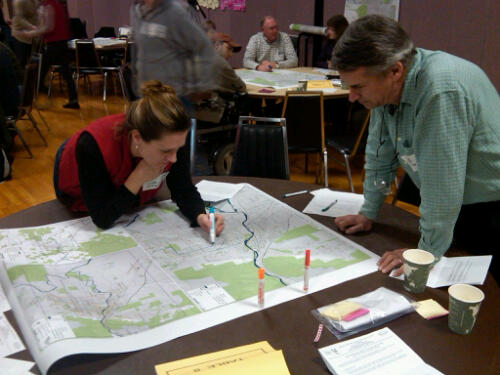
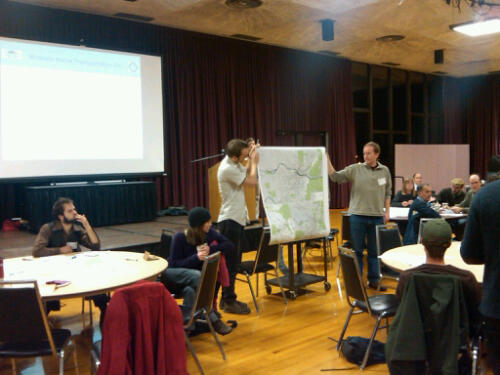
The community workshop was pretty interesting to watch play out. The night it was held was cold and snowy, yet about 2/3 of people biked and most of the rest walked. With perhaps upwards of 60 or 70 people in attendance, everyone worked through a series of group oriented activities. Of course everyone's favorite involved drawing on a map of Missoula.


And once the individual groups had finished their discussion and mapping each shared their results with the entire workshop.


Out of this event came a lot different input but the general themes included:
- improved connectivity
- finish the trail/sidewalk/bike lane network
- reduce posted speed limits, at most 35 mph
- improve street lighting
- implement our complete streets policy
- focus transportation more on safety than traffic flow

Thursday, January 28, 2010

I Don't Usually Reference Hitler, But... Random Bicycle Crap Fridays

Hitler has finally weighed in on the "bicycles as traffic debate." Of course I don't mean the real Hitler, but the fairly random "Hitler rants about..." clips floating around the internet. There are some pretty funny ones, with topics ranging from Brett Farve, Healthcare Reform, Obama, Xbox Live, and WoW. But now someone has finally given Hitler an opinion on bycling.


Tuesday, January 26, 2010

"Riding a Bicycle on a Roadway" Now Illegal (in Texas)

For days I have been enthralled by the slowly unraveling story of fellow cyclist and carfree blogger ChipSeal who has been arrested - more than once - for driving his bike on a public roadway (in Texas) in the last week. Each day he reveals more details or more of his inner thoughts on the utter stupidity of the situation.

I won't cover the whole story, since ChipSeal does it so well with very well timed wit, for the real thing go to his blog, or visit Commute Orlando for a great commentary largely inspired by ChipSeal's ordeal and the ordeals of other cyclist's in similar situations.

Essentially he is being harassed by law enforcement at the behest of whinny motorists for obstructing their right to go fast without any impediments to their forward progress. In his last post ChipSeal prods bicycle advocates to give a shit and show it by doing something other than lobbying for laws and infrastructure and get down to something that will be real and solid in protecting/enforcing cyclist rights in Texas.

I might be a long way from Texas... but it sounds like small town Texas could be infused with some of the enthusiasm for theme rides that the cyclists of Portland are infected with. Seems to me that a "Solidarity Ride" needs to be organized to bring cyclists from all over Texas (or the nation) to ride through these small towns that are trying to restrict cyclist's rights, or harassing the few cyclists present on the road, as a show of solidarity and numbers.

But what do I know about Texas from my perch in the snowy mountains of Montana.

And I was going to do a short post on the little parking ticket I received on campus yesterday... though I still managed to slip it in there.

Sunday, January 24, 2010

Winter Clean Up

Spring is fast approaching, or it could even be here already considering the warm weather we have been having here in Missoula, and with the coming of spring it means that my year of car-free existence is coming to an end. Come April my year will be over, but that doesn't mean that I will suddenly end my commitment to alternative transportation and turn into a car-crazed American.

And just because my car-free year is coming to an end doesn't mean that this blog's purpose will suddenly vanish. As many readers might have noticed, much of the content I have been writing isn't actually about my car-free experience, but rather about alternative transportation and urban design issues. This will not change.

And with that said... it is time to perform a little clean up and catch up with my car-free stats for the last two months.

Week 35

Miles Biked: 57.62
Gallons Saved: 3.60
CO2 Not Emitted: 22.62 Ibs

Week 36

Miles Biked: 8. 21
Gallons Saved: .513
CO2 Not Emitted: 3.223 Ibs

Month 9

Miles Biked: 123.14
Gallons Saved: 7.69
CO2 Not Emitted: 193.33 Ibs

Week 37

Miles Biked: 12.69
Gallons Saved: .793
CO2 Not Emitted: 4.98 Ibs

Week 38

Miles Biked: 9.23
Gallons Saved: .577
CO2 Not Emitted: 3.63 Ibs

Week 39

Miles Biked: 0.00
Gallons Saved: 0.00
CO2 Not Emitted: 0.00

Week 40

Miles Biked: 27.42
Gallons Saved: 1.72
CO2 Not Emitted: 10.76 Ibs

Month 10

Miles Biked: 49.34
Gallons Saved: 3.08
CO2 Not Emitted: 19.37 Ibs

Week 41

Miles Biked: 53.84
Gallons Saved: 3.37
CO2 Not Emitted: 21.13 Ibs

Week 42

Miles Biked: 62.76
Gallons Saved: 5.23
CO2 Not Emitted: 24.63 Ibs

Tuesday, January 19, 2010

Winter Riding Update

Temperatures have risen to a balmy 40 F the last two days. It actually been a fairly warm week in general with temps hovering just above freezing most days. And to give you an idea of just how bad the ice was the last couple of weeks... there is still ice in places on the road after a week of melting. Now that temperatures are back up I'm no longer the lone cyclists out there and even with rain today there are a number of people out on their bikes.

I really felt unsafe in many situations over the course of the worst road conditions here in Montana. My usual routes along neighborhood side streets were often completely un-ridable from the thick coating of undulating ice. Which forced me onto many main streets where the roads were clear but the traffic was heavy. I never had a close call, but it was still very unsettling to to be forced onto busy roads that had become constricted because of plowed snow piling up on the roadway. Just from a personal perspective, the perception that an auto is safer in such conditions really does make them much more utilitarian than a bike.

As for the score so far this winter... Ice - 2, Me - 0. And yes, to all those family reading this... I had a helmet on both times I took a spill on the ice.

Wednesday, January 13, 2010

Walkscore: Something seems a little off

What do I do with my free time? Play around with Missoula's Walk Score of course... and find that it is broken.

For those who have never been to the Walk Score website, the purpose is to calculate the friendliness of different neighborhoods based on the proximity of amenities such as services, restaurants, etc. According to the Walk Score website, the algorithm used assigns the maximum number of points for amenities that are within a 1/4 mile of the location entered. While this is a good measure of walkability, I would argue that factors such as street design, traffic volume, speed limits, and neighborhood character would make the model Walk Score uses much more accurate and relevant.

To illustrate my point you can see below the streetscape of Phillips, the street on which I live. My address received a 69, meaning that only 27% of locations had higher walkscores than my house.


Now contrast my neighborhood's Walk Score with the one received by the location seen below. I randomly typed in an address along Brooks, a four lane arterial with speeds ranging from 35-45 with lots of traffic, congestion, business activity, and almost no cyclists or pedestrians.


This section of Brooks received a Walk Score of 83, 14 points higher or about 20% more "walkable" than where I live. I think its pretty intuitive just from the pictures of the two different locations which one would be more friendly to active transportation... and its not the one Walk Score recommends.


There is a lot more to getting people walking than just how close they live to given amenities or their job. Paramount is safety, or at least the perception of safety along design aesthetics. I would venture to guess most people would rather walk down a tree lined, quiet street with on street parking acting as a buffer, than a busy, loud arterial surrounded by parking lots and neon lights.

I think Walk Score might be broken.

Monday, January 11, 2010

Coeur d Alene: Safety Fail, No Saftey in Numbers for Bike/Peds

Over the weekend I was hit by a car, and it provides me with a good opportunity to talk about safety in numbers that cyclists and pedestrians create and how streetscapes and development patterns contribute to safety.

Let me setup what happened. I took the Greyhound from Missoula to Coeur d' Alene (CDA) Saturday morning to visit my folks. There is no physical transfer station in CDA, rather the bus drops you off at a gas station that sits at the corner of a large intersection (Ramesy and Appleway) where two four-lane arterials meet (total of 22 lanes at the intersection).

Anyway, the bus dropped me off at a different location than the Greyhound website gave for the (nonexistent) station. My father was coming to pick me up, but since he doesn't have a cell phone there was no way to get a hold of him, so I decided to walk north along the western side of Ramsey to find a good place to wave him down as he came to pick me up.

Two blocks later I was crossing the intersection below, which is an old picture as the intersection now has a four-way light, within the cross walk while a car was waiting for an opening to turn right-on-red. I walked out in front of his car, attempting to make eye contact because I could sense he was ready to hit the gas to make an opening, but he was looking the other direction. Needless to say he hit the gas and ran right into me. Luckily he immediately stopped and I wasn't hurt other than a small bruise on my leg.


This incident got me thinking how ridiculous the incident was. Living in Missoula, I have walked hundreds, perhaps even a thousand miles around town over the course of seven years. In that time I have never been hit by a car... I don't even remember having a close call. But here I am, back in the town I grew up in, and five minutes after stepping off the bus I am hit be a car.

The whole time I lived in CDA, I never once got around by walking or biking, rather the only real way to get around is by car. Seven years of walking in Missoula = no problem, five minutes of walking in CDA = getting hit by a car. Missoula and CDA are also fairly close in terms of population size.

Why is this? Because of not only the streetscape that dominates in CDA (suburban arterials with speeds above 35 mph) but also the development pattern that essentially forced those types of roadways to be built.

You can see these patterns at play in the photo of CDA below. I have highlighted all the four lane arterials (red corresponding to suburban arterial design and yellow representing four lane roads with an urban character). CDA is a maze of suburban subdivisions that are only connected to the wider community through the use of a lot of arterials. Only a small portion of CDA (which also includes the towns of Dalton Gardens, Hayden, and Hayden Lake) actually has a street network laid out in a grid. This pattern results in a very spread out population with very low densities (Dalton Gardens is zoned at 1 house/acre).


Because people have to drive everywhere and there are almost no pedestrians or cyclists, the motorists don't look out for these types of people. Those whom do walk or bike are mostly a working-poor underclass -except for the roadies - that most suburbanites don't spend any time thinking of between trips to Starbucks, work, and dropping the kids off at soccer practice.

Now contrast this with Missoula (a photo with the same types of streets highlighted can be seen below). The bulk of Missoula is based on a grid system and subdivisions with a suburban character only exist at the fringes of the town. Not only that, but the most of the four lane roads that Missoula does have exist within areas that are urban in character (higher densities, tree lined streets, sidewalks, smaller lot setbacks, and slower speeds). The four lane suburban arterials are located again mostly at the edges of Missoula and so cyclists and pedestrians can largely avoid these roads by choosing quieter streets.

Also consider the the geographic distance these two photos show. The photo of Missoula covers most of the town and most of the town's population. The photo is 3.5 miles x 3.5 miles while the photo of CDA shows an area 7.5 miles x 7.5 miles that leaves out a considerable amount of development to the north. Missoula's compact nature encourages alternative transportation simply through its shorter distances.


The higher densities, shorter distances, and more welcoming streetscape encourages people to walk and bike. In much of the central part of Missoula you can't go more than a couple of blocks without seeing another pedestrian or cyclist. Just the numbers of pedestrians and cyclists using Missoula streets makes motorists more aware of them and creates a situation where motorists must constantly be on the lookout. This creates a Safety in Numbers phenomenon whereby the more cyclists and pedestrians out on the roads, the less absolute fatalities and crash cars have with cyclists and pedestrians.

Describing what had happened, even my very conservative father understood the relationship between development patterns, streets, and mode of travel. In his opinion, and I have to agree with him, CDA is a town that will never see a lot of people walking, biking, or using transit simply because the towns infrastructure makes those options economically difficult and even dangerous.

Wednesday, January 6, 2010

Thwarted by Ice

The last two days Missoula has seen some Hellish weather. Yesterday started out nicely enough with a light snow falling on my morning commute. The little bit of ice on the roadways forced me to go a bit slower than normal. By the time I made it to the campus however, the temperature had increased enough to turn the light snow into a wet mess of sleet in the air and slush on the road.

It then proceeded to snow and rain alternatively all day and by the time my day was over the roads were covered in a thick layer of slush and lots of puddles filling the low spots in the road. Without any fenders on my mountain bike my three mile commute felt almost like I was swimming through some very brackish water.

As soon as I was warmed up I made sure to put on a rear fender. Unfortunately it was a futile gesture to try and keep me comfortable since the weather conspired to keep me off of my bike today. Over night all the rain and wetness had frozen solid into a sheet of ice up to several inches thick in places. This included covering all of my bikes in a shinny layer of ice.

The brakes were completely frozen and useless... the cables, calipers, and triggers were all useless. Ice covered the seats of both my road and fixie, while even the wheels and hubs on my fixie were covered in a layer of ice. Rather than spend 20 minutes trying to unfreeze all the components and then worrying about putting too much stress on the metal being so cold.

So thanks to Ashley for being gracious enough to provide me with a ride this morning.

Monday, January 4, 2010

Second Thoughts on the Copenhagen Wheel


The last week of the Copenhagen Climate Conference saw a lot of buzz for something completely unrelated to climate change. While world leaders tried and failed to put together a sensible plan on climate change (who am I kidding, there is nothing sensible about anything related to politics) an announcement out of MIT's SENSEable City Lab basically stole the show for many in the bicycle community. The Copenhagen Wheel combines hybrid technology (think Prius), connectivity through the use of a smart phone, and the best, most reliable, and technologically simple form of transportation to yet exist... the bicycle.

This really is a great idea, for more information watch the video here, but after my initial WOW reaction to reading about this invention, I started to think about how I would find the Copenhagen Wheel practical to use in my everyday journey by bike and I came instead came away with two concerns.

First, the Wheel main means of generating energy to be stored is when a rider uses the coaster brake. This goes against the basic operation of a bicycle where a person attempts to conserve as much forward momentum as possible and braking makes up a very small portion of a person's time on a bike. In the attempt to conserve forward momentum cyclists blow through stop signs and even red lights (I'll admit to doing exactly that when there is no traffic to worry about).

It's highly doubtful that people would significantly change their behavior just to get a little charge. Unlike with a hybrid vehicle, whereby people changing their driving behavior to fit the dynamics of a hybrid and thus driving becomes more efficient, changing behavior to fit the mechanics of the Copenhagen Wheel would seem to make a ride less efficient.

However, Christine Outram, a research associate at the SENSEable City Lab informed me that the Copenhagen Wheel does take these facts into account having an additional "exercise" mode that can be switched on. In this mode, excess energy from pedaling is used to charge the batteries. Of course, this mode is meant for those who like to ride at a fast clip and so may not be of much utility to those cyclists whom prefer to take a leisurely ride.

The second concern is the distraction of operating everything through a smart phone. A large debate surfaced this summer surrounding the safety implications of texting and driving, and I see no difference here just because the bicycle is a few thousand pounds less. Texting or talking on a cell phone while biking is extremely distracting and dangerous, I can attest to this by witnessing plenty of people attempting such feats and thereby swerving all over the place, losing their balance, and generally becoming unaware of their surroundings.

While the Copenhagen Wheel smart phone interface is integrated into the handlebars of a bicycle, this system still requires that a ride look down and take one hand off the handlebars to operate; creating a distraction and making the bicyclist take their eyes off the road. Its not hard to imagine someone fiddling with their smart phone and wondering into a busy intersection.

Thursday, December 17, 2009

Parking Wars in Downtown Missoula


Missoula's downtown faces many of the same problems that most downtowns in America face. One of those problems is dealing with parking. Our cities long term planning envisions big growth for our little city over the next 20 years, especially in our urban core (seen above) where a lot more people will not only come to shop and eat lunch, but also increasingly come to live. To deal with this growth and the subsequent need to accommodate more cars downtown, Missoula's Downtown Master Plan calls for the building of seven new publicly owned multi-story parking structures at the cost of tens of millions of dollars to tax payers and using up precious real estate for the storage of our communities vehicles.

Recently this issue came up in Missoula's city council and discussed further in a great local list serve updated by one of our council members to keep Missoula citizens informed. A possible update to Missoula's parking meter system erupted into the biggest debate I have yet to witness occur over the email list serve. Over 30 emails went back and forth detailing almost all points of view people have on parking downtown.

Friend and colleague Jordan Hess made some very succinct point about the absurdity of spending public money to subsidize parking downtown. Jordan had this too say:

There is no such thing as free parking. Ever. Even the parking at Walmart is highly
subsidized in the form of infrastructure improvements the the city has to foot the bill for (such
as the idea of adding a second left turn lane from Reserve to Mullan).


If parking in the urban core is free, than it will be taken up by people parking for a long period
of time, such as employees or area residents and it won't be available for customers of
downtown businesses or for folks stopping by government offices. There are many ways to
properly price downtown parking to make it hassle-free and affordable. If parking were free, I
believe it would actually be a strain on downtown businesses because less would be available
to their customers. It would certainly be a strain on city budgets.

Building new parking structures is far more expensive than providing premier transit. At
$50,000+ per space
(I've seen figures more in line with $15,000 - $30,000 per space),
parking structures are an extremely expensive way to get people downtown. It is absurd to
imply that Missoula can't have a good transit system because we are not a large city full of
wealthy people. There are solutions for our size of community.


I'm going to use the University (of Montana) as an example, because I am more familiar with
it than with downtown in terms of parking and transportation, but the two function similarly in
these regards. On campus, ASUM spends about $0.65 per ride provided on the Park and Ride.
While this may seem like a lot, in order to provide parking for the same amount of money, a
parking space would have to turn over more than 5 times a day, 365 days a year for 40 years
(a rather generous lifespan for a parking garage). This doesn't take into account the cost of
maintaining the garage (about $1,000 per space per year).


Consider this: paying for one person to NOT use a parking space is the exact same thing as
building one new parking space. If by providing better bus service, I opt not to use an
on-campus parking space, it is functionally identical to the university building one additional
parking space, but the difference is that it cost the university a fraction of the cost.


We need to use this model downtown. Do not build any additional parking. Instead, spend this
money on increasing transit into downtown. This WILL free up parking used by people who
find the current level of transit service to be inconvenient. This newly available parking can be
used by folks who cannot or simply choose not to ride transit.


I couldn't agree more. Providing alternatives to driving and parking is a much more cost effective way to use a communities limited resources. Missoula's zoning regulations allow for business to replace one parking spot with 8 bike parking spots. Even if you figure that surface parking costs between $5,000 - $10,000 per spot then exchanging one parking space for 8 is a great value. Not only does a developer save money, but the city saves from reduced impacts on city streets from encouraging people to ride bicycles, and everyone wins when congestion is reduced. Eight bicycle parking spots would probably cost between $500 - $800 while an equivalent number of surface parking spots for vehicles would cost at least $40,000. Big difference.

Planners and urban design theorists are starting to come around to the idea that "if you build it, they will come." One commenter on the list serve said
so long as personal vehicles remain the preferred and affordable means for people to go to and from Downtown, it is necessary to accommodate vehicles. This is the standard argument used for everything from road expansion to our current federal transportation spending.

If you build a large 6 lane expressway, it will encourage people to drive and if you design cities to sprawl and build large box stores with large parking lots then people will largely be forced to drive. Building more roads will not reduce traffic and building more parking spaces will not reduce parking problems, but in fact induce people to drive and use those extra spaces. This situation is called the Jevons Paradox in which gains in efficiency actually encourages more consumption. Homes built today are more energy efficient than those built 40 years ago, but they are also so much bigger to the point that the average house uses more energy than 40 years ago.

This works just as well in reverse. If you reduce road capacities, congestion is actually reduced as people find better and easier ways to get around that doesn't require driving. At the same time, if bicycle infrastructure is invested in and mass transit increased this will induce demand for these services as it becomes more convenient. Not only does a community spend less money to accommodate locally focused transportation but it frees up real estate when fewer roads need to be expanded and fewer parking structures built. This extra real estate can be invested in, creating wealth and jobs in the local community rather than creating a larger tax bill for city residents.

Fewer roads and parking spaces and more transit, bicycle infrastructure, and buildable real estate = lower tax payer costs, more wealth, more investment, more jobs, and a more vibrant, resilient, and livable community.

Thursday, November 19, 2009

David Orr on Post-Carbon Cities


Missoula was lucky enough yesterday to have David Orr in town. In between the meetings usual social events, there was enough time for him to give two lectures at the University of Montana.

For those of you who don't know of David Orr, he is a leading thinker and innovator environmental issues, green building, and ecological design. Within the last decade he gained national press for his effort and subsequent success in building a fully carbon-neutral building on the campus of Oberlin College which can be seen above. It integrates passive solar design by orienting the building to take advantage of the suns energy, a roof fully covered by solar panels, sustainable materials, food production in the form of a garden and orchard on the north side of the building, and environmental restoration on the wetlands immediately adjacent.

David Orr covered post-carbon cities in the lecture I attended. The scope of his talk was extensive, delving heavily into the philosophy behind green building/urban design. What resounded with me was his call to take a systems approach to issues. He blames academia for the tradition of reductionist thought that breaks issues/objects into components without concerning itself with how the whole works or interacts with the world. He used the example of optimizing the Hvac system of a building without also optimizing the insulation or materials used in the building.

By taking a systems or wholistic world view we can come to better understand the world and the interaction between our actions and the environment. This is true of economics - which as a student of economics I fully agree with - where one doesn't pay the full cost of any product. Externalises exist everywhere and with every purchase; a vehicle doesn't really cost only $20,000 if you include the pollution from its manufacture and operation, the cost of the roads it travels, and the cost of disposal, etc. If all these costs where taken into affect, our world would be a much different place. There would be no coal fired power plants if the coal industry had to directly pay for every death caused by the pollution it creates.

Back to post-carbon cities. David has an ambitious goal of turning Oberlin into a carbon-neutral city, starting by redeveloping the downtown area to be an eco-village. He is taking a ground up approach by gathering support and investment from within the community. This seems like a much better approach for such a project than the one taken by Saudi Arabia and China in attempting to build their own respective eco-cities, both of which after years of being in the design and planning phases have gone nowhere.

Of course, building a fully carbon-neutral town is a big challenge, as not only do the buildings have to be redesigned, but people's behavior's have to radically change and a whole new local economy built from scratch. If David Orr has any misgivings about such a project, its is that he doesn't know whether people are willing to do what needs to be done to create such an ecologically friendly future.

He is optimistic in terms of having all the tools ready and at his finger tips. David talked of how over the last thirty years scientists and entrepreneurs have developed the tools to create such a future and now everything simply has to be brought together and integrated. Social awareness has also progressed enough to allow the building of such a future. This is especially true within professions that can move something such as eco-cities along. Daniel Narrin over at Discovering Urbanism illustrates this point in a recent post. Having found a planning text book from the early 1990s, he was surprised to see how far the profession has developed in two decades, having found that the book never once mentioned pedestrians or cyclists and describes environmentalists only as obstructionists against progress.

It now seems very possible that the environmentalists so reviled by many only two decades ago will be the ones innovating and creating our future as it has gone from a movement of obstructionism to one of practical application and problem solving. Best of luck to David Orr and his vision of a carbon-neutral future, I hope to experience it one day.

Monday, November 16, 2009

Book Review: After The Car

Full Disclosure: I received a free copy in return for this review

Despite the provocative title and front cover of the book, After The Car by authors Kingsly Dennis and John Urry, there is little radical thought or ideas that give a blueprint on how our society will organize after the decline of the personal automobile. That said, if you are new to how personal transportation issues relate to global climate change, economics, social organization, and urban design, than this book gives a short and concise summary that provides a good overview of all these issues. Overall After The Car is a well-written and well-thought out book that is concise and covers a lot of ground in a very small package.

At a mere 164 pages, After The Car, takes the reader through a handful of today's most pressing issues. The first chapter quickly explores the situation we find ourselves in today, including climate change, peak oil, the growth of the Internets, and the supremacy of urban areas. This quick overview sets the stage for the rest of the book and for how we got to the situation we find ourselves in today.

The heart of the book delves into how the car came to completely reshape our lives. At one time the automobile was a new and disruptive technology. At the beginning of the car's history it transformed the lives of millions of people and led to a huge leap in productivity. But after a century of the car's dominance it has come to signify, "...many of the most troubling aspects of human civilization."

The authors take the view that the dominance of the car is thanks to the convergence of various trends such as allowing for freedom of mobility, the huge increase in economic productivity it allowed, and the complete seepage of car culture into the fabric popular American culture. But this wholehearted acceptance of the car has led to unintended consequences. The car system's full adoption by society has come to mean high levels of pollution, possible climate change, economies that are held back by the maintenance of sprawling transportation networks, and the adverse social affects that come with being so spread out and disconnected from one's neighbor.

As for my aforementioned disappointment, once the book finally makes it to a diagnosis for our future, there is very little in the way of new thinking and rather mostly a simple summary of current trends that might come to partially supplant the current transportation system. The trends covered include denser living through new urban design, rapid personal transit, electrical vehicles (EVs), and green cities. The authors express great hope in the idea of green cities such as Dongtan China, even though most of the over hyped green trophies are still just nice drawings on some government official's desk.

The criticism I can't get out of my head is talk of how EVs and biofuels will be a part of the solution. For a book entitled After The Car it seems a bit of contradiction to propose that EVs and biofuels will really change anything. How many trillions of dollars will ultimately need to be spent on infrastructure to build generating capacity just to power our EVs and how little will that investment reduce our green house gas emissions? This is a question that the authors simply gloss over.

Overall, After The Car, does an excellent job of giving a concise overview of many of the issues that will shape our new century and how that could affect our transportation system. But there is little revolutionary thought held within the pages of the book, and despite the title, there is almost no vision of our future after the car.

Tuesday, November 10, 2009

Complete Streets WIN

Complete Streets policy has been spreading for some time now thanks largely in part to groups like the National Complete Streets Coalition and local advocacy groups like Missoula's own BWAM and MIST. For the uninitiated, complete streets is a concepts and policy goal of designing streets that are accessible to all populations. This means a de-emphasis on moving at high rates of speed and making infrastructure improvements that make safety for pedestrians and bicyclist more of a priority.

Check out this map of America showing where complete streets are taking affect. And for those interested, Transportation for America has an online petition that asks DOT head LaHood to emphasize pedestrian safety.

And now it appears that we have some evidence that complete streets design is actually helping to make our most abundant of public spaces safer. Transportation For America recently released a long worked on report, Dangerous By Design, that highlights street design failings and success.

Columbia, MO seems to be a shinning example of complete streets policy at work.

This from an article at KOMU.com by Josh Frydman:

In 2004, Columbia passed a complete streets ordinance, which specified how streets should be designed. This included five-foot sidewalks on all streets as well as bicycle accommodations on certain streets, and that sent a very clear signal that Columbia is serious about encouraging people to walk and bike in Columbia.

Columbia's Pedestrian Danger Index scored four times lower than the national average. Columbia reported just two pedestrian fatalities from 2007 to 2008, and just 3.8% of the total traffic deaths during that time were pedestrians.

This is just a portion of the rethinking of street design that is slowly sweeping across our country. After more than half a century of placing almost all our efforts into moving more cars and seeing this strategy fail over and over change is finally snowballing. Bike paths/lanes, mass rapid transit, sidewalks, green streets, and the redesigning of intersections are the new fashionable strategies in many cities for dealing with transportation.

We are even importing a few good ideas from the Europeans, GASP! Hans Monderman's design concept of shared space is replacing the idea of traffic control with controlled chaos. This can be seen in the growing number of roundabouts and uncontrolled intersections that force different modes of transportation to actually interact and be cautious towards one another.

Each roundabout or transportation plan that includes complete streets is only a small step, but a decade of small steps takes you far from your starting point.

Sunday, October 4, 2009

Pictures From Missoula's 2009 PedalFest

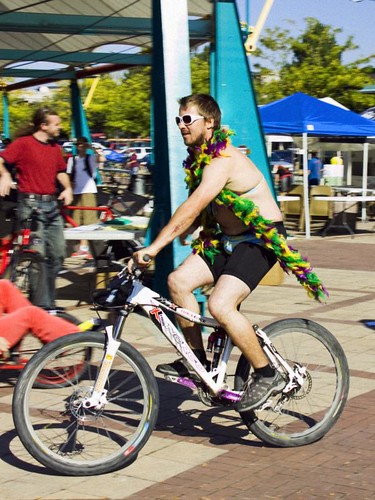
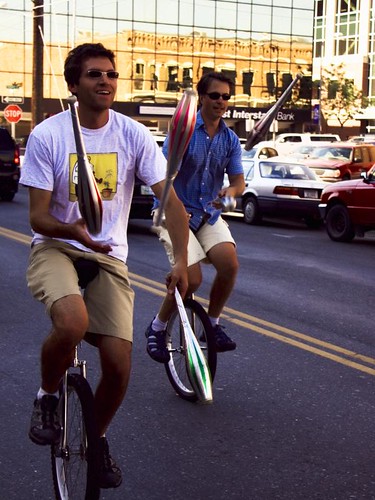
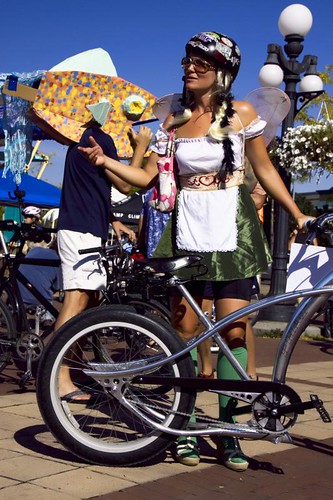
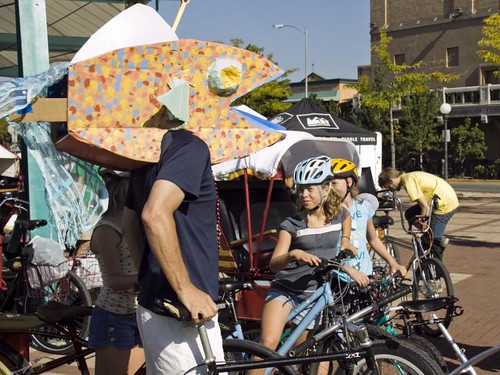
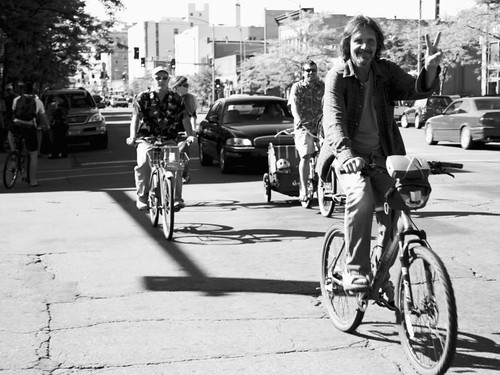
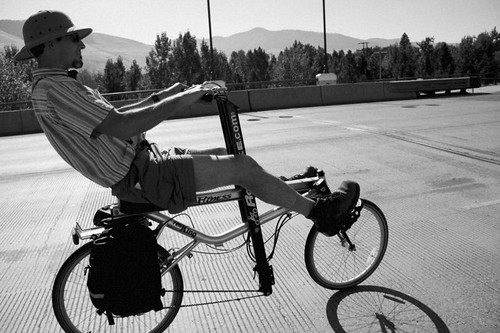
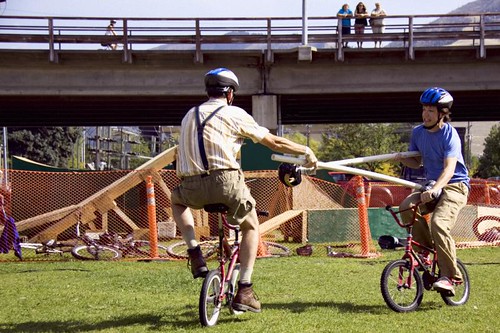
I finally made it through a few my photos from this years Pedalfest. So, I'll let the photos speak for themselves. Enjoy.


Thursday, October 1, 2009

Pet Peeve Regarding Motorists Number 1


Throughout my time being carfree there is one nagging behavior that keeps popping up among motorists that really annoys me. The complete disregard certain drivers (assholes) display for a cyclist waiting at an intersection. Here I am in these situations trying to obey traffic laws and be a good little cyclist when some asshole acts like an asshole. Maybe assholes just don't view people on bikes as real people, and therefore they can ignore and marginalize us. We are less then them, we are... sub-asshole. For more on the subject of assholes, cars, and the cyclists they hate, you should read this blog post from the Boston Biker Blog, explaining how to deal with assholes.
Over and over again while I wait patiently at intersections, a vehicle will come from behind and not stop after me, but pass and stop in front of me at an intersection. It happened again yesterday and seems to happen regardless of whether I have taken the lane or am waiting behind another vehicle.

At the intersection of Scott and Toole, I stopped behind an SUV turning left, about ten seconds later a Chevy truck pulled up and rather than acknowledge me, nudged in behind the SUV. When I waved at the driver to get his attention and using my hands to explain, not the middle finger, that I was there before him, he just looked at me and shook his head in apparent disgust. At which point, when the SUV got an opening to go, I quickly moved forward to block the asshole from moving forward.

At the same spot a month back I was the only one at the intersection trying to take a left but cross traffic was to heavy to find an opening when an Eclipse pulled up, passed me, and without stopping peeled-out into traffic. Of course I learned a valuable lesson then... Eclipse are officially cool again now that I know they can peel-out.

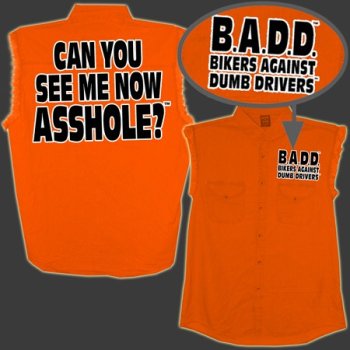
These incidents seem to happen mostly at stop signs. But still, in the 6 months I've been carfree, this has happened 6 or 7 times. Maybe I need something like the clothing below to fend off assholes:


Monday, September 28, 2009

A Few Thoughts on Jane Jacobs

I finally made it through Death and Life of Great American Cities the other day and can move on with my life. I'm embarrassed to say that I started reading Jane Jacobs' classic last spring while there was still snow flying.

While the book is showing its age, especially regarding discussion about banks and housing projects (now that most housing projects have been or will be torn down). Nut overall Death and Life is still a very important piece of literature.

Jane Jacobs obviously takes a lot of pride in the small details that make up a city, the parks, people, sidewalks, building facades, and local entrepreneurs that make up a city. The small details are what matter the most when it comes to building a community with a sense of place and character and it is precisely these most important small details that planners often over look.

That is the inherent contradiction of planning, it is a profession that takes a look at the big picture for the most part, and until recently when collaborative planning has become part of the process, the small details that make a community thrive were missing from planners' radars. That is way the collaborative process is so important, to fill in gaps in knowledge and design that planners might not have access to.

The book is a big proponent of cities as "organic" structures that are not stagnant but alive and constantly in flux. As such, organic growth of neighborhoods, associations, relationships, and the urban structure of cities are what make fro vibrant and strong cities and not massively scaled urban renewal projects that attempt to sanitize an area.

She doesn't spend much time on the car, other than to emphasize the positive feedback the car's influence on city design has on the erosion of vibrant and diverse cities. Cars must be designed for, and in accommodating the use of cars, forces a separation and spreading out of what used to be mixed-use areas because of the pressures of moving and storing vehicles.

Her message from all this critique is simple; that people have to take back the planning process from government bureaucrats that don't have a city's or neighborhood's best interests in mind. Ideas such as Radiant City and Garden City design must be thrown out and replaced with something that actually expresses the reality of people's needs and psychology.

I guess since planning will be my profession I need to heed her words even though the planning process has significantly changed since the book was originally written.

Thursday, September 24, 2009

Random Bicycle Crap Fridays: Advertising FAIL

For today's Random Bicycle Crap Fridays, patent pending, I am once again diverging from my normal pattern of irrelevant nonsensical crap and featuring something I find just a little ironic.

Obviously, people that visit this blog know that its about trying to live carfree for a full year besides the other transportation and urban design related musings. But this small little tiny detail must have slipped by someone recently when they wanted to advertise on this site.

A spokes-person for RentACarNow.com emailed me inquiring about possible advertising space. Here is the email:

My name is ____,

I work for RentACarNow.com, a rental car search engine.

I stumbled on http://imaginenocars.blogspot.com/ and was interested in advertising on your front-page.We are interested in a link featuring our company.

Would you be interested in something like this? Also, would you be willing to set up a 6 month or 1 year deal?

Please let me know.

Thank you for your time.

I personally find this fairly amusing, as I never set out upon this journey with the idea that I would make any money. Not only that but obviously this person didn't spend that much time figuring out what this blog is about, but maybe that is my fault. Do rental cars count as "alternative transportation"?

I guess these are the kinds of opportunities/hassles that I have to now deal with since becoming a "new media" content producer/shit shoveler. The kind of opportunities I like having offered to me are more like book reviews (which come with free books). I had my first complimentary book sent to me by a publisher titled, After the Car, by Kingsley Dennis and John Urry. I have not started reading it yet, but now that I'm done with Jane Jacob's masterpiece, I can finally move on.

What I want to know from the few readers that have made it this far, and I'm guessing thats not many since there is now video of a cyclist hitting their nuts on something, is is there a difference between the two offers?

I automatically accepted the offer for a review copy of the book, but have yet to respond to the advertising offer. After the Car seems to fit perfectly with the message/bullshit I broadcast from this blog on a daily basis, but the rental car thing is just plain contradictory. But am I selling out by accepting either of the offers? Or would I be selling out if I accepted the rental car advertising offer?
Bookmark and Share